The Michael Jackson biopic doesn’t just disappoint—it betrays the fundamental promise of the biopic genre. Instead of illuminating the man behind the moonwalk, it delivers a sanitized, emotionally hollow spectacle that avoids the very complexity that defined Jackson’s life and legacy. For a figure so mythologized, so controversial, and so culturally seismic, the film’s refusal to grapple with truth, contradiction, or vulnerability renders it not just inadequate, but misleading.
Biopics, at their best, act as emotional archaeology—digging beneath public image to expose private pain, ambition, contradiction, and transformation. Consider Ray, Walk the Line, or Bohemian Rhapsody. These films don’t just reenact events; they interpret them, offering insight into how trauma, talent, and triumph intersect. The Jackson biopic, however, operates like a highlight reel with a soundtrack—chronologically tidy, visually polished, and emotionally inert.
The Core Failure: No Insight into the Man
A biopic’s basic duty is to answer: Who was this person? Not just what they did, but how they felt, what shaped them, and what cost they paid. The Jackson biopic sidesteps this entirely. It presents Michael Jackson as a performer first and a person second—if at all.
We see the glove, the hat, the crotch grab—but rarely the child star broken by fame, the artist obsessed with perfection, or the man desperate for love and acceptance. The film treats his abuse at the hands of his father as a background detail, not a psychological anchor. His changing appearance? Glossed over. His relationships? Reduced to cameos.
This isn’t restraint; it’s evasion.
Take the moment Jackson first dons the sequined glove. The film shows it as a stylistic choice. But for fans, that glove symbolized reinvention, armor, a shield against a world that had already seen too much of him. A great biopic would linger on that moment—not as costume, but as metaphor.
Avoiding the Hard Truths
Great biopics don’t flinch. The People vs. Larry Flynt didn’t glorify Flynt—it showed his vulgarity, his courage, and his pain. Capote exposed the moral rot beneath the charisma. The Jackson biopic, by contrast, walks on eggshells around anything remotely uncomfortable.
This is understandable—Jackson’s estate is reportedly involved, and with it, the guardians of his legacy. But that involvement comes at a cost: truth. The film makes no serious effort to reconcile the allegations of abuse—neither confirming nor denying, just… omitting. It presents Jackson as a victim of media persecution without examining the substance of the claims or the lived experiences of the accusers.
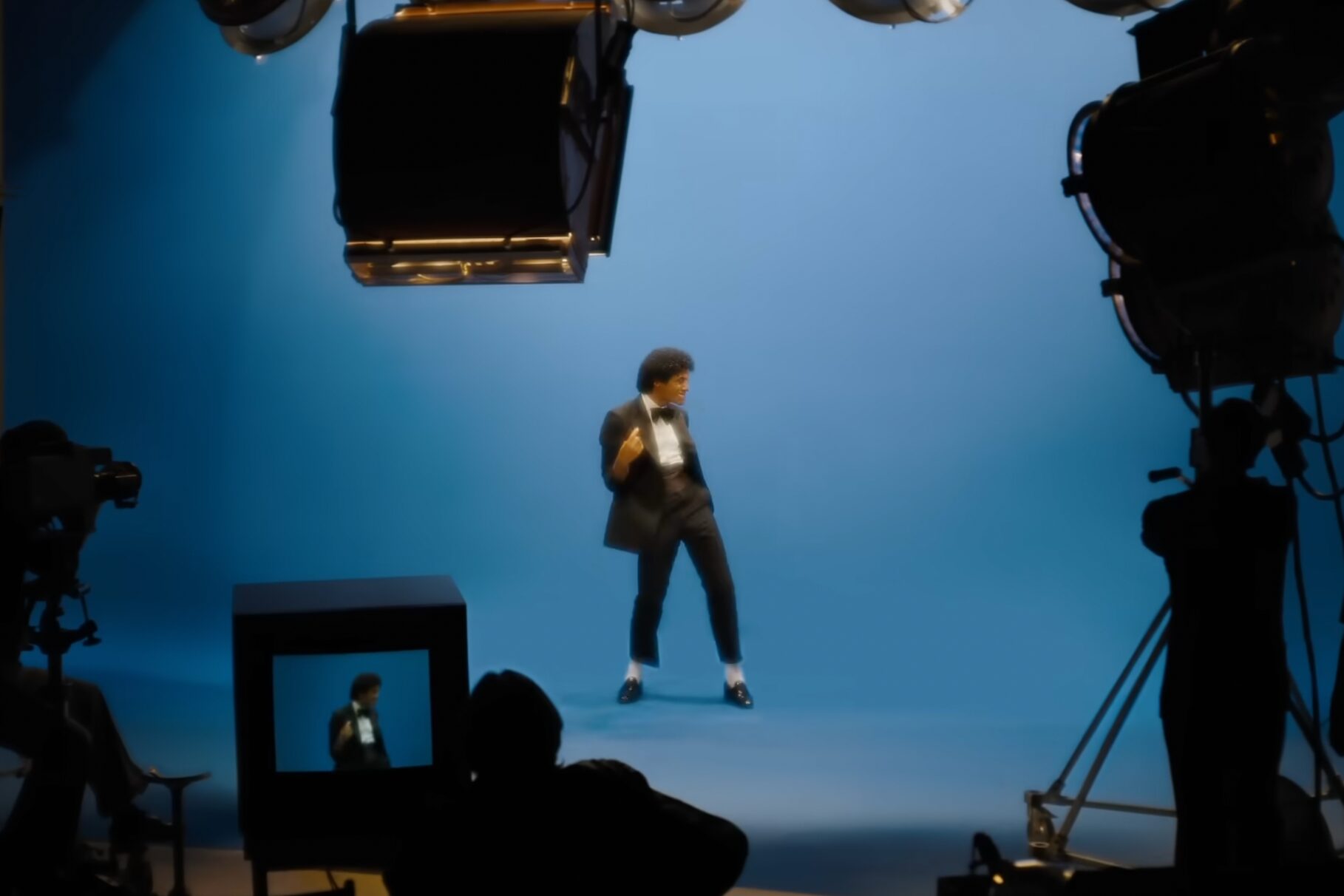
That’s not protection. That’s propaganda.
And it does a disservice to Jackson himself. A truthful reckoning wouldn’t diminish his artistry—it would deepen it. The tension between genius and damage, innocence and accusation, public image and private doubt—that’s where real drama lives. The film avoids it, leaving only a wax figure in its place.
Performance vs. Personhood
One of the film’s most glaring flaws is its obsession with recreating performances at the expense of personal development. We get Thriller note-for-note, Billie Jean down to the lean, Smooth Criminal with the anti-gravity tilt—but we don’t get the man who made them.
How did “Beat It” emerge from a mind shaped by abuse and isolation? What did “Man in the Mirror” mean to a man who rarely saw himself clearly? The film doesn’t care. It treats Jackson’s music as product, not expression.
Compare this to Control, the biopic of Ian Curtis of Joy Division. The film doesn’t recreate concerts so much as use them as emotional barometers. When Curtis sings “Love Will Tear Us Apart,” you feel the strain in his marriage, the weight of his illness. The music becomes a mirror. The Jackson film uses music as decoration.
The Child Star Who Never Grew Up
Michael Jackson’s life was defined by arrested development. The child who became a global star at seven never fully matured into conventional adulthood. He built Neverland, surrounded himself with toys and children, and spoke in a high-pitched voice—behaviors critics saw as eccentric, fans as endearing, and others as deeply concerning.
A courageous biopic would explore this not with judgment, but with curiosity. What does it do to a psyche to be raised on applause and control? How does a person form identity when the world only sees the mask?
Instead, the film treats Jackson’s eccentricities as quirks. His childlike demeanor is presented as sweet, not symptomatic. His relationships with young boys are framed solely through the lens of friendship and mentorship—never questioning power dynamics, boundaries, or emotional dependency.
This isn’t innocence. It’s willful blindness.
The Role of the Estate: Censorship in the Name of Legacy
It’s no secret that the Jackson estate has tightly controlled the narrative since his death. They’ve settled lawsuits, blocked documentaries, and licensed music selectively. The biopic bears their fingerprints—every omission, every soft focus, every musical montage that substitutes spectacle for substance.
This isn’t filmmaking. It’s brand management.

Consider the 2019 documentary Leaving Neverland. Whether you believe the accusers or not, the film forced a conversation—uncomfortable, necessary, and long overdue. The official biopic doesn’t want that conversation. It wants reverence. It wants merchandising. It wants to keep the image intact.
But legacy isn’t built on silence. It’s built on reckoning.
And by refusing to engage with the full spectrum of Jackson’s life—his brilliance, his pain, his contradictions—the film doesn’t honor him. It diminishes him.
What a Better Biopic Could Have Done
A truly great Jackson biopic wouldn’t shy from the darkness. It would show the Motown years not as a triumph, but as a factory of child labor. It would explore his relationship with Diana Ross not as fairy tale, but as complex mentorship tinged with dependency.
It would dramatize the making of Thriller not just as a creative breakthrough, but as a pressure cooker of perfectionism and isolation. It would show the plastic surgeries not as vanity, but as a man trying to escape a face he never liked—and a body that carried too much history.
And yes, it would address the allegations—not to convict or exonerate, but to show how they shaped his final years: paranoid, defensive, estranged.
Such a film would be messy. Uncomfortable. Necessary.
The Cost of a Failed Biopic
The failure of this biopic isn’t just artistic—it’s cultural. By presenting Jackson as a flawless icon, it perpetuates the very mythmaking that isolated him in life. It teaches audiences to consume celebrity without context, to admire without questioning.
Worse, it sets a precedent. If one of the most scrutinized, controversial, and psychologically complex figures in pop history can be reduced to a greatest-hits reel, then what’s the point of the biopic genre at all?
We don’t need hagiography. We need humanity.
Conclusion: Biopics Should Reveal, Not Conceal
The Michael Jackson biopic fails at the basic duty of a biopic: to reveal the person behind the persona. Instead of depth, we get dazzle. Instead of truth, we get tribute.
For those seeking insight into Jackson’s genius, pain, or paradox, this film offers nothing. But it does serve as a cautionary tale: when legacy control overrides artistic honesty, the result isn’t preservation—it’s erasure.
If we truly want to honor Michael Jackson, we must stop protecting the myth and start confronting the man. Only then can his story—and his music—mean something real again.
Actionable takeaway: Seek out documentaries, biographies, and interviews that don’t flinch—from Leaving Neverland to J. Randy Taraborrelli’s biography. True understanding comes not from polished recreations, but from messy, complex, and honest accounts.
Frequently Asked Questions
Why is the Michael Jackson biopic considered a failure? It fails to explore Jackson’s inner life, avoids controversy, and prioritizes performance reenactments over emotional truth—betraying the core purpose of a biopic.
Does the film address the abuse allegations against Michael Jackson? No, it largely ignores them or frames Jackson solely as a victim of media scrutiny, offering no meaningful engagement with the accusers’ claims.
Was Michael Jackson involved in the making of the biopic? Jackson died in 2009, but his estate is heavily involved in licensing and oversight, which likely influenced the film’s sanitized portrayal.
How does this biopic compare to other music biopics like Bohemian Rhapsody? While Bohemian Rhapsody had flaws, it at least attempted emotional arcs and relationship drama. The Jackson biopic feels more like a concert film than a character study.
What should a Michael Jackson biopic have focused on? It should have explored his childhood trauma, artistic evolution, psychological complexity, and the tension between his public image and private struggles.
Is the film accurate in its portrayal of Jackson’s career milestones? Yes, it accurately depicts major performances and events, but accuracy in events doesn’t compensate for emotional or psychological inaccuracy.
Can a fair biopic of Michael Jackson ever be made? Yes—but only if it’s independent of estate control and willing to confront both his genius and his failings with equal honesty.
FAQ
What should you look for in Michael Jackson Biopic Misses the Soul of the King of Pop? Focus on relevance, practical value, and how well the solution matches real user intent.
Is Michael Jackson Biopic Misses the Soul of the King of Pop suitable for beginners? That depends on the workflow, but a clear step-by-step approach usually makes it easier to start.
How do you compare options around Michael Jackson Biopic Misses the Soul of the King of Pop? Compare features, trust signals, limitations, pricing, and ease of implementation.
What mistakes should you avoid? Avoid generic choices, weak validation, and decisions based only on marketing claims.
What is the next best step? Shortlist the most relevant options, validate them quickly, and refine from real-world results.